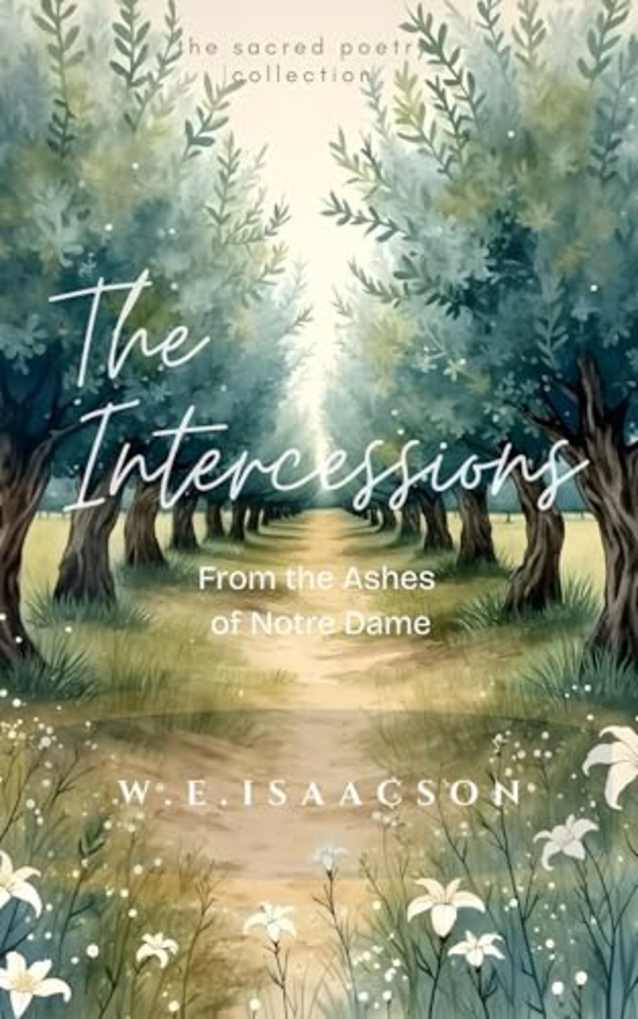
The Intercessions: From the Ashes of Notre Dame
About
In The Intercessions, Winter gathers prayers from the ashes of Notre Dame and binds them into sonnets that stand as vigil candles against the dark. This sacred cycle of poems weaves ruin with hope, memory with mercy, and lament with the quiet resolve to rebuild what fire could not consume. Rooted in real history yet alive with devotion, these verses speak as priest and pilgrim, guiding the reader through stone corridors and vaulted prayers into a gentle resurrection of faith. The Madonna of the Streets appears in quiet corners, her hidden face a reminder that mercy often walks unseen among the forgotten. Wildflowers sprout from ashes, olive groves stand watch over old scars, and relics of thorns and timber carry whispers of the Passion into a modern age of flame and fragile hope.
The Intercessions is more than a book of poems; it is a vigil in your hands — an invitation to stand watch over the ruins of faith, culture, and heart, and to believe that light still flickers in the embers. Each sonnet turns prayer into art, each stanza bends like a ribbed vault to lift the reader’s gaze higher, asking us to remember that the true cathedral is not only built of stone but of living hearts who dared to intercede. For all who stand among the broken beams — whether of ancient cathedrals or their own inner sanctuaries — these pages offer a psalm for the restless, a hymn for the hidden, and a quiet benediction for the faithful who keep singing when the world falls silent. From riverbanks and relics to the final whispered hymn, The Intercessions calls us to kneel among the ashes and rise singing, a chorus of watchmen keeping vigil for dawn.
Trailer
Praise for this book
This collection feels deeply tied to land and geography, and that gave it weight for me. When the poems move beyond Notre Dame into places like Provence or river valleys, it doesn’t feel like a detour. I never got the sense the writer was trying to impress anyone. It reads like someone writing through something heavy and unresolved.
Some poems hit harder if you sit with them instead of moving on. Morning in the Burned Cathedral was especially affecting. That quiet moment after disaster, when everything is still standing but nothing feels the same, was painfully familiar. There’s no attempt to wrap things up neatly, even later in the book. The grief doesn’t disappear and that kind of honesty mattered to me. It treats faith as something that can hold sorrow without immediately turning it into reassurance.
Kneeling, standing, clasping hands, watching from the ground. It keeps the voice from becoming abstract. In some places, the boundary between the speaker, Christ, and the cathedral blurs . . . but I found it fitting. Trauma does that. These poems don’t position the speaker as special or enlightened. They feel small in the face of what’s happening, which made them more believable.
Hope here feels practical, not emotional. There’s also a steady contrast between fire and water throughout the book. Rivers, oil, baptism, rain. It’s subtle, but it keeps resurfacing. Reading it felt like standing between destruction and renewal without knowing which one would win. That uncertainty felt honest and earned.
Sound plays a bigger role in this book than I expected. Bells, choirs, organs, and even the absence of music come up repeatedly. The poem about the organ surviving stood out because it focuses on something fragile that almost didn’t make it. It’s not framed as a miracle, just a close call. That restraint made it more effective.
The Intercessions is a luminous testament to faith and resilience. Winter transforms the ashes of Notre Dame into sonnets that glow like vigil candles, weaving ruin with hope and lament with quiet resolve. Each poem is a prayer, each stanza a soaring vault of mercy and memory. This is not just a book of poetry. It’s a spiritual journey, a hymn for the hidden, and a call to rise from the ruins with light still flickering in your heart. Simply breathtaking.